


Travelling Sumatra in 2025: Everything You Need to Know
How Big is Sumatra?
authenticsumatra.org – Sumatra is the largest island within Indonesia, with an area of 473,481 km2 (294,207 miles). To put that into perspective, the United Kingdom is only 242,495 km2 (150,679 miles), so this one island of Indonesia is almost twice as big as that entire area.
An estimate from 2021 stated that just over 59 million people call Sumatra home. Compare this again to the UK (at half the land area) with a population of 66 million-ish people and you’ll see that there’s quite a lot of room to move in Sumatra.
Where is Sumatra?
Located in wonderful, eclectic, exotic Indonesia, the top half of Sumatra’s east coast is just a stone’s throw from Singapore or the Malaysian capital of Kuala Lumpur (around a one hour flight to each city).
From the southern tip, you could practically swim across to Java – home ofIndonesia’s capital, Jakarta — although obviously, we don’t recommend trying it.
The equator passes almost smack through the middle of Sumatra, and Pulau Weh (also known as Sabang) — the small island off the northern tip Sumatra in Aceh province — actually marks Kilometer Nol –the northernmost point of Indonesia.
What is Sumatra Famous For?
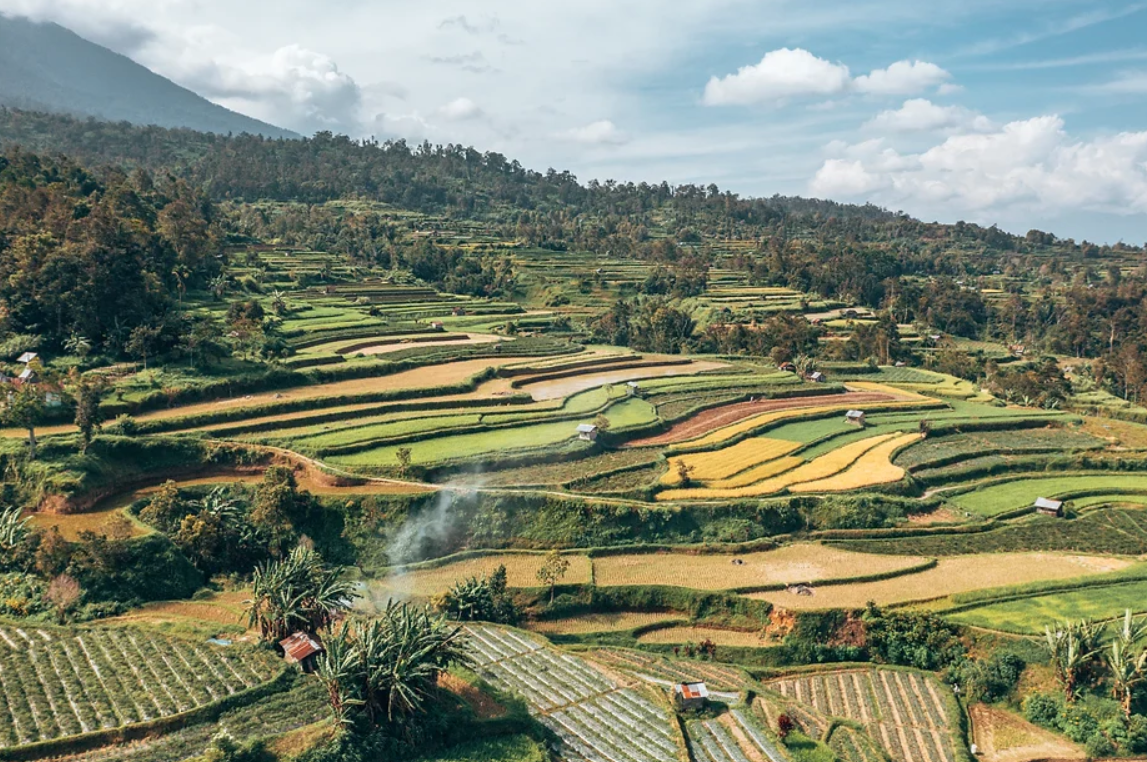
Tourists usually come in search of the natural wonders on offer: orangutans and other iconic wildlife, pristine jungles and steamy volcanoes.
Unfortunately, Sumatra also has the unwanted honour of having the highest rate of forest loss in the WORLD, losing an estimated 40% of old-growth forest over the last 20 years.
This island is also rich in natural treasures, it’s famous for its high-quality coffee, and a slew of agricultural products like rubber, tea, tobacco, palm oil (ugh) and more. There’s also petrol, gas, coal, gold, silver and other goodies to be had.
What is the Best TIme to Visit Sumatra?
Perched on the equator, Sumatra is a true tropical island — just a really, really big one! There are only two seasons: wet and dry. Officially, the wet season is from October to April, so naturally, dry season is from May to September.
To get a little more accurate, in the north, you can typically expect the most rain between October to January, and in the south, November to February. The average temperature throughout the year is 28 degrees Celsius (82.4 F).
Having said this, bear in mind that times are a-changing (thanks global warming!) Living as locals in Sumatra, we’ve noticed that the lines between the seasons are blurring. In the last few years, it’s been rather unpredictable.
The good news is that it doesn’t really matter too much. Even in wet season, you will seldom see days where it rains all day. More often, you get an hour or two of torrential rain in the late afternoon and evening and can carry on as normal before that.
The added bonus is that the wet season is usually accompanied by some truly spectacular thunderstorms for a bit of holiday excitement.
Here’s a super secret tip for you: rainforests (and areas adjacent) see more rain! Shocking, we know. Be prepared for a bit more rain in these regions, although, again, you’ll usually be able to find plenty of non-rainy time to get out and about.
One thing to note, dry season does make for a bit of an easier journey if you’re heading to places where the roads aren’t quite so good, which is pretty much everywhere outside of the big cities.
In a nutshell, Sumatra is hot and humid most of the year. Sometimes there’ll be more rain bucketing down than you ever imagined possible, while at other times, the rivers will dry up to trickles, but you’ll seldom be cold, unless you are heading for higher-altitude areas.